ARTiculate: An AI-Powered App for Emotional Literacy
Role: UI/UX Research & Design
Duration: Sept 2025 - Oct 2025
Tools: Figma + AI Tools
ARTiculate is a zero-to-one product concept designed to help autistic children ages 6–12 explore emotions through creative expression. Guided by Arlo, an AI companion, children name, express, and reflect on their feelings through drawing. Proposed parent and therapist dashboards bring their artwork and emotional check-ins together to support conversations about patterns over time.
Our six-person team developed ARTiculate for the +Tech Innovation Jam, earning the Audience Choice Award and placing in the Top 5 of 72 teams.
My role: UX Research and Design
Conducted interviews with two therapists and one parent of an autistic child.
Applied secondary research and children’s UX best practices to the product experience.
Created user flows, wireframes, high-fidelity mockups, prototypes, and the demo video.
Developed the branding, design system, and custom interface components using AI tools alongside Figma and Illustrator.
Designed Arlo, his facial expressions, narrative storyboards, and the gamification strategy.
We collaboratively defined the product concept and priorities. Teammates also contributed customer discovery, market segmentation, pricing, go-to-market strategy, and technical planning.
Understanding Emotional Expression and the People We Designed For
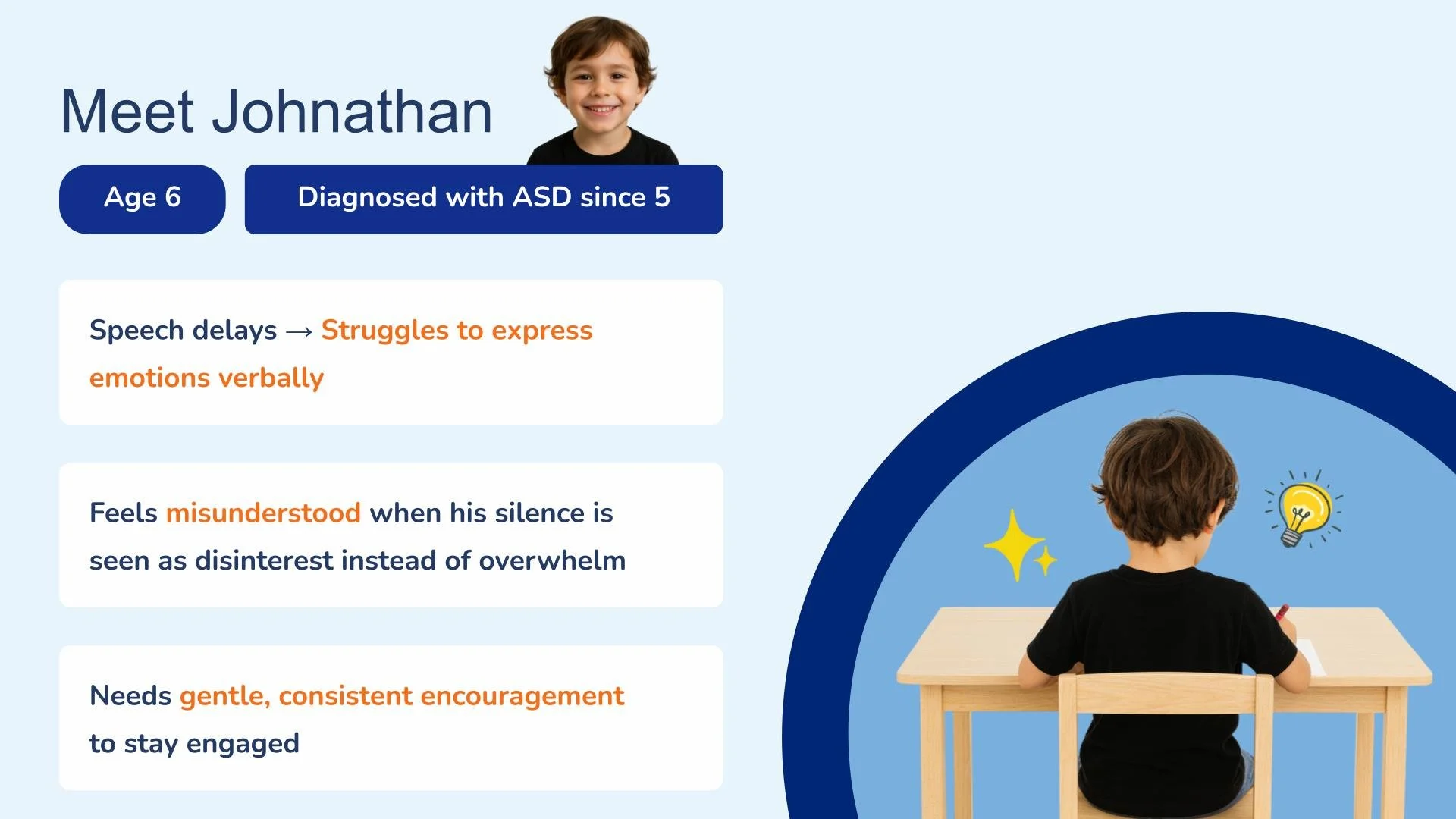
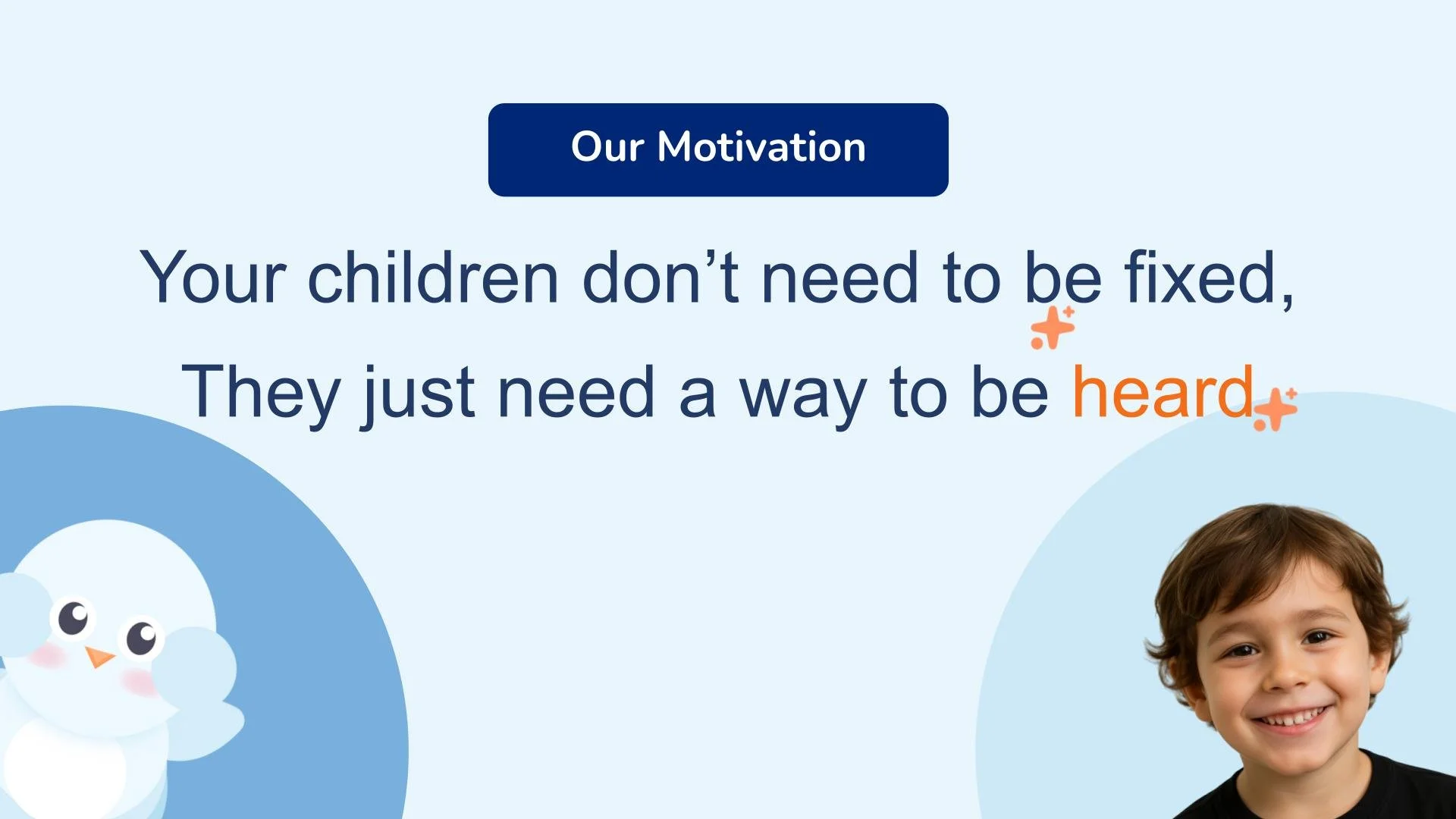
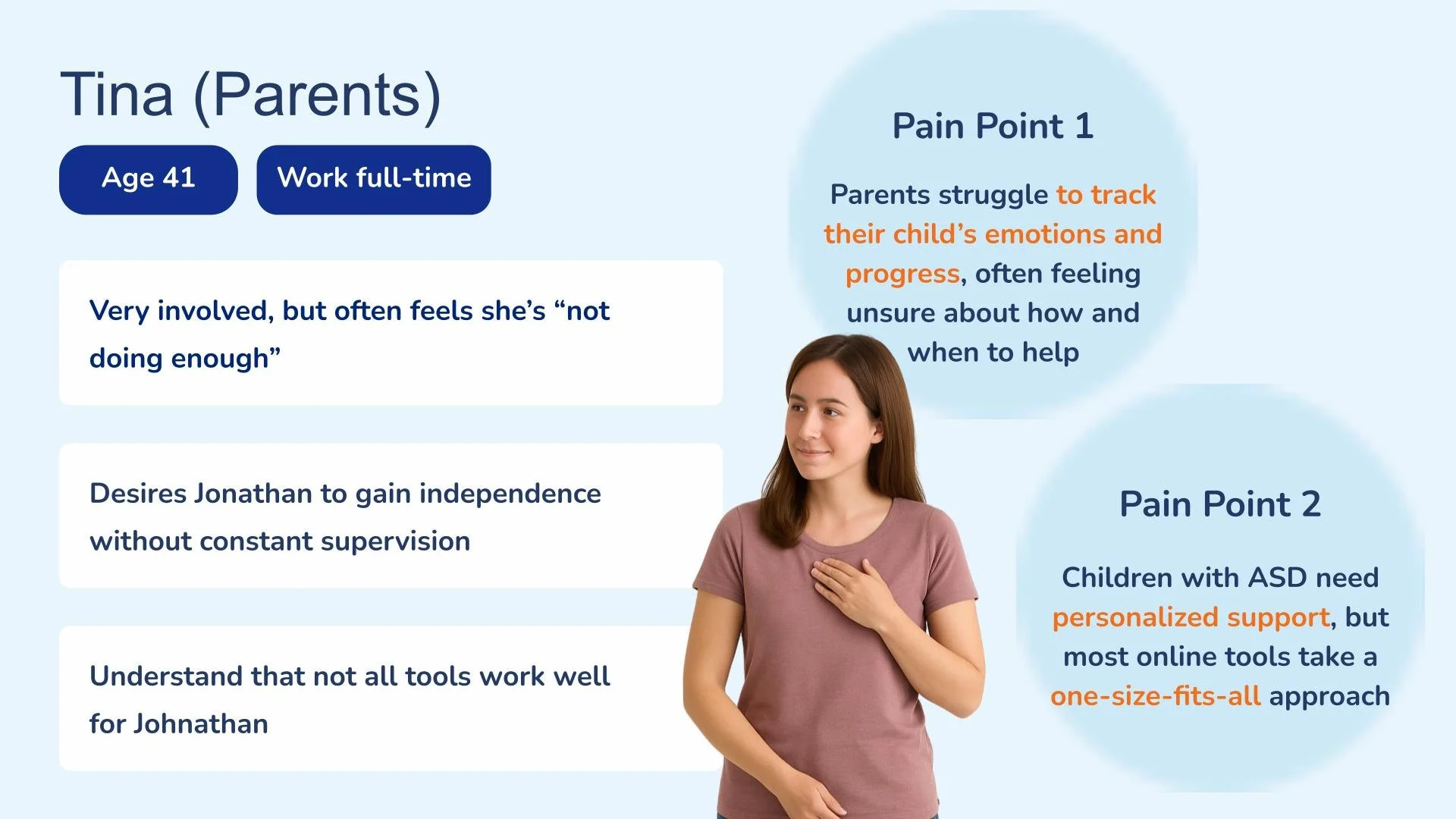
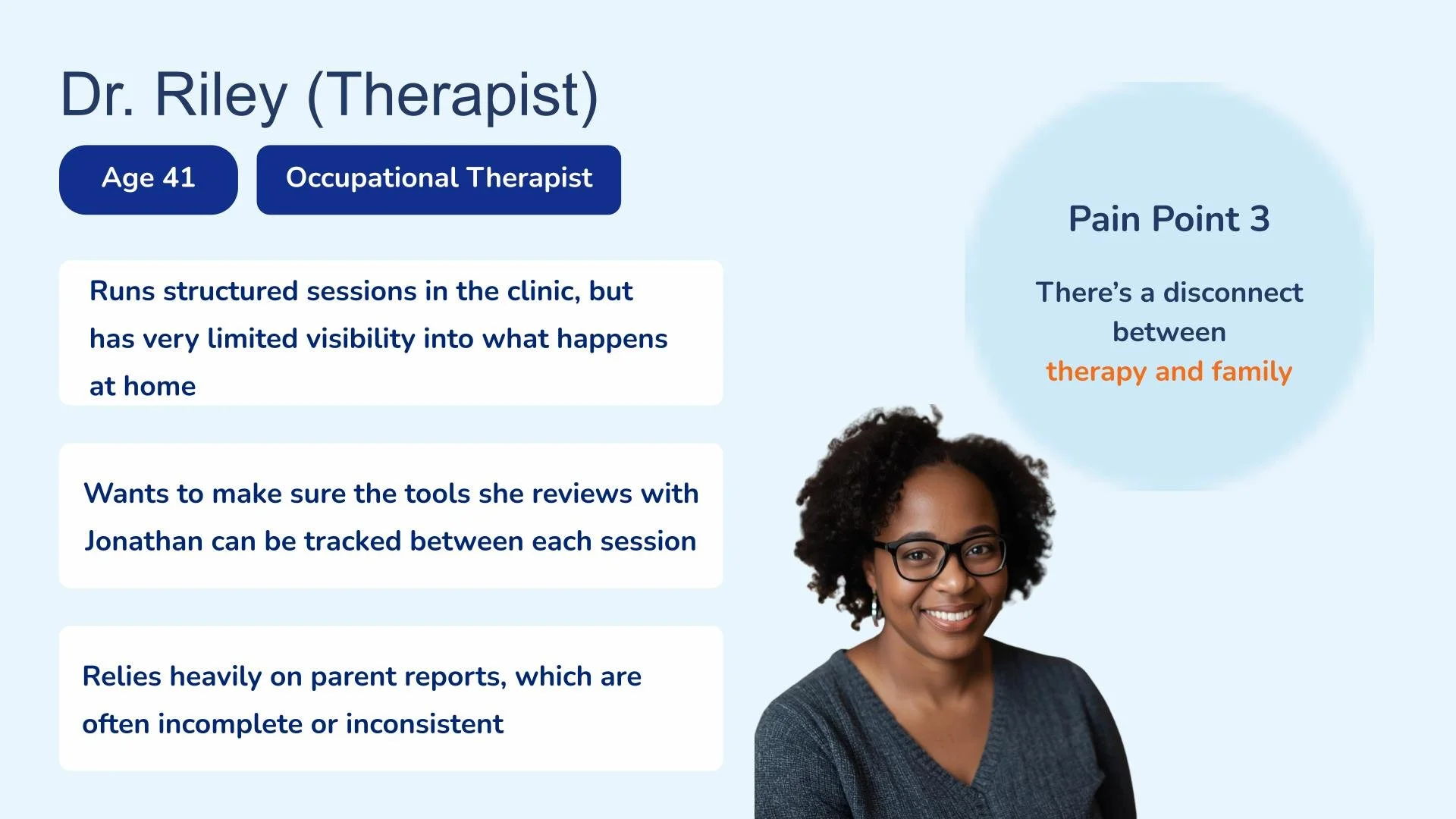
We began with a communication challenge: some autistic children experience feelings they struggle to identify or express verbally. Parents may find it difficult to understand what their child is experiencing, while therapists have limited visibility into what happens between sessions.
I interviewed two therapists and one parent to understand existing approaches to emotional learning, the support children need during creative activities, and how families continue those practices at home. Our team combined these conversations with additional customer discovery and secondary research on emotional literacy, art-based activities, and children’s UX.
The research helped us consider two connected needs: understanding feelings internally and recognizing emotional cues in others. This gave the experience a broader purpose than choosing an emotion label. Children would have opportunities to express their own feelings and explore emotions through a character’s experiences.
We also needed to accommodate different drawing abilities and preferences. Therapist interview discussions highlighted that some children need help getting started, while others benefit from more freedom. The concept needed to provide structure without making every child follow the same creative process.
Translating Research into Product Priorities
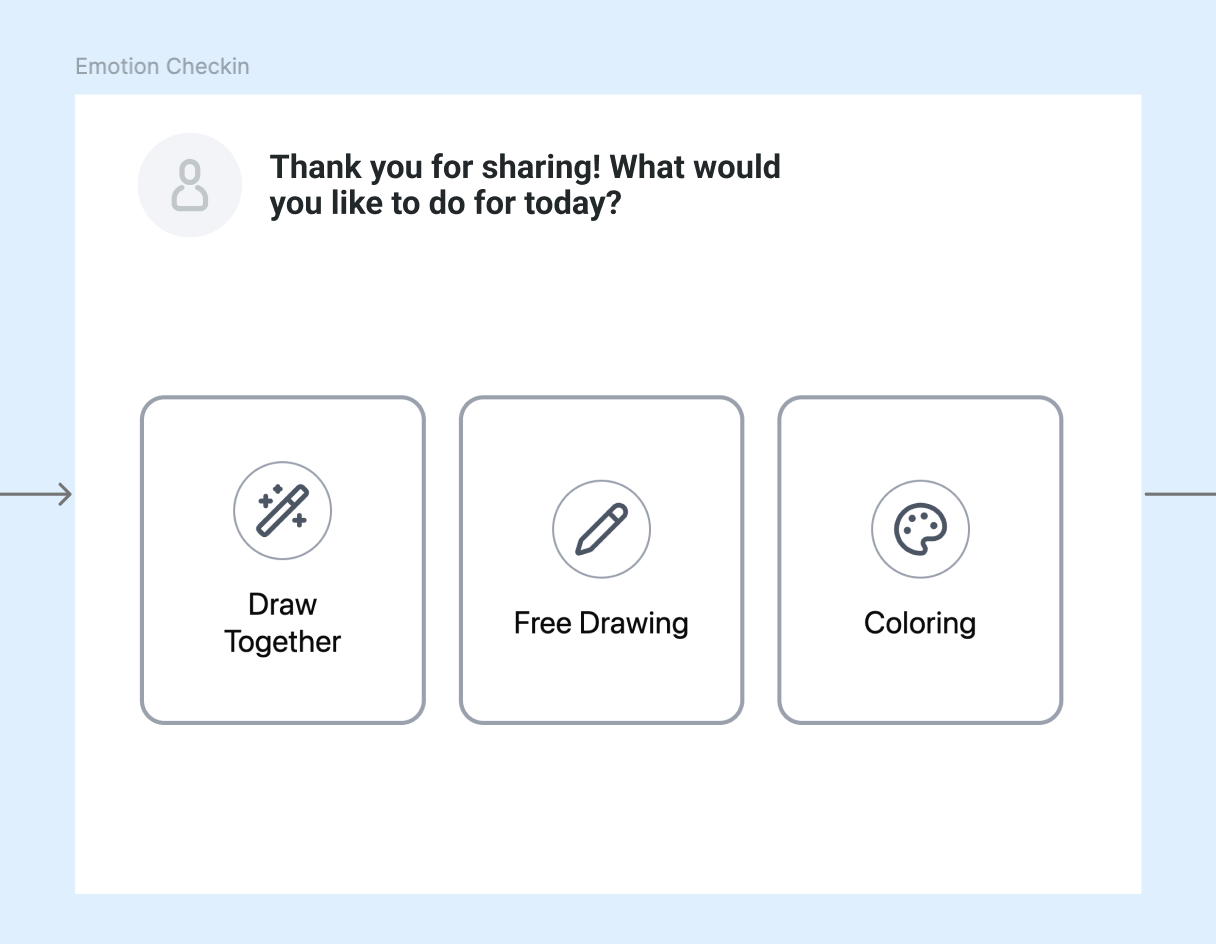
Offer different starting points for creative expression
Therapists described varying drawing abilities and support needs: some children benefit from structure, while others prefer open-ended activities. We defined Free Drawing, Coloring, and Draw Together to offer different levels of guidance while preserving children’s choice of activity and subject.
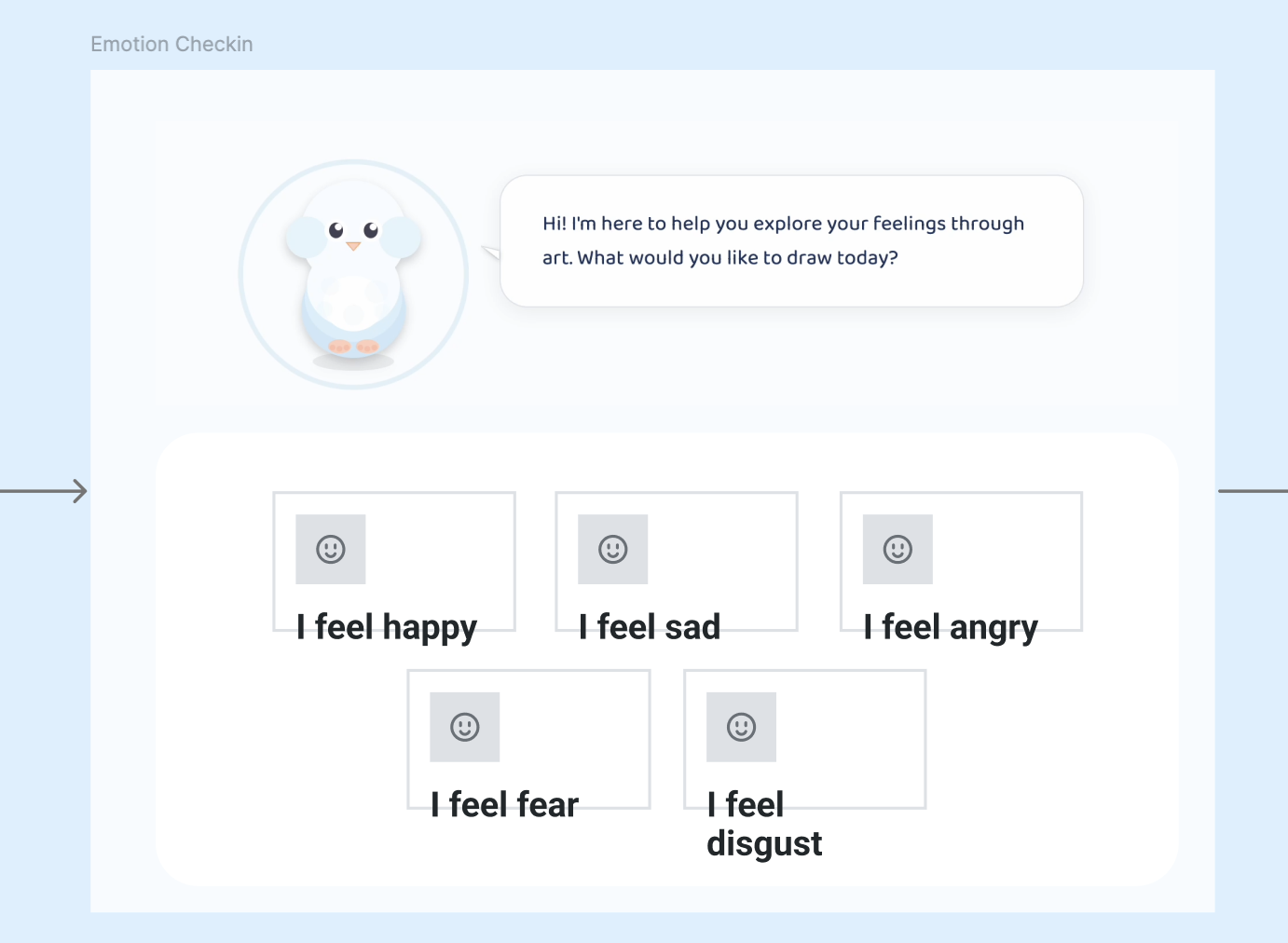
Let children describe their own feelings
Early concepts explored AI interpretation of drawings, but therapist interviews emphasized reflection over assumptions about a child’s emotional state. This informed Name → Express → Reflect, with check-ins before and after drawing so children could describe their own experience.
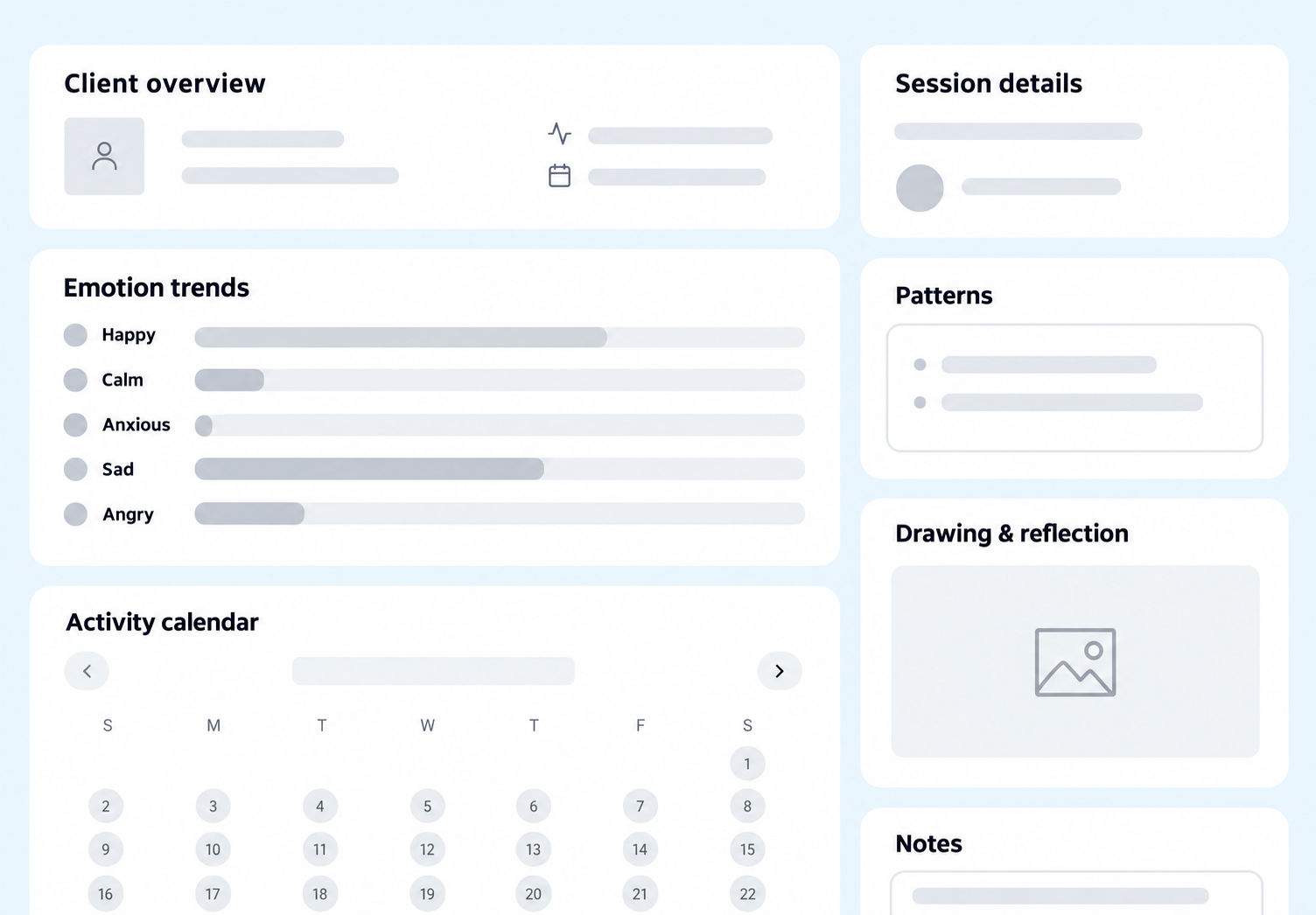
Support continuity between therapy and home
Interview discussions highlighted the importance of continuing activities between sessions and therapists’ limited visibility into experiences at home. We proposed dashboards that brought drawings and emotional check-ins together for parents and therapists to review and discuss.
Refining Visual Communication
Later feedback from parents and therapist informed these changes
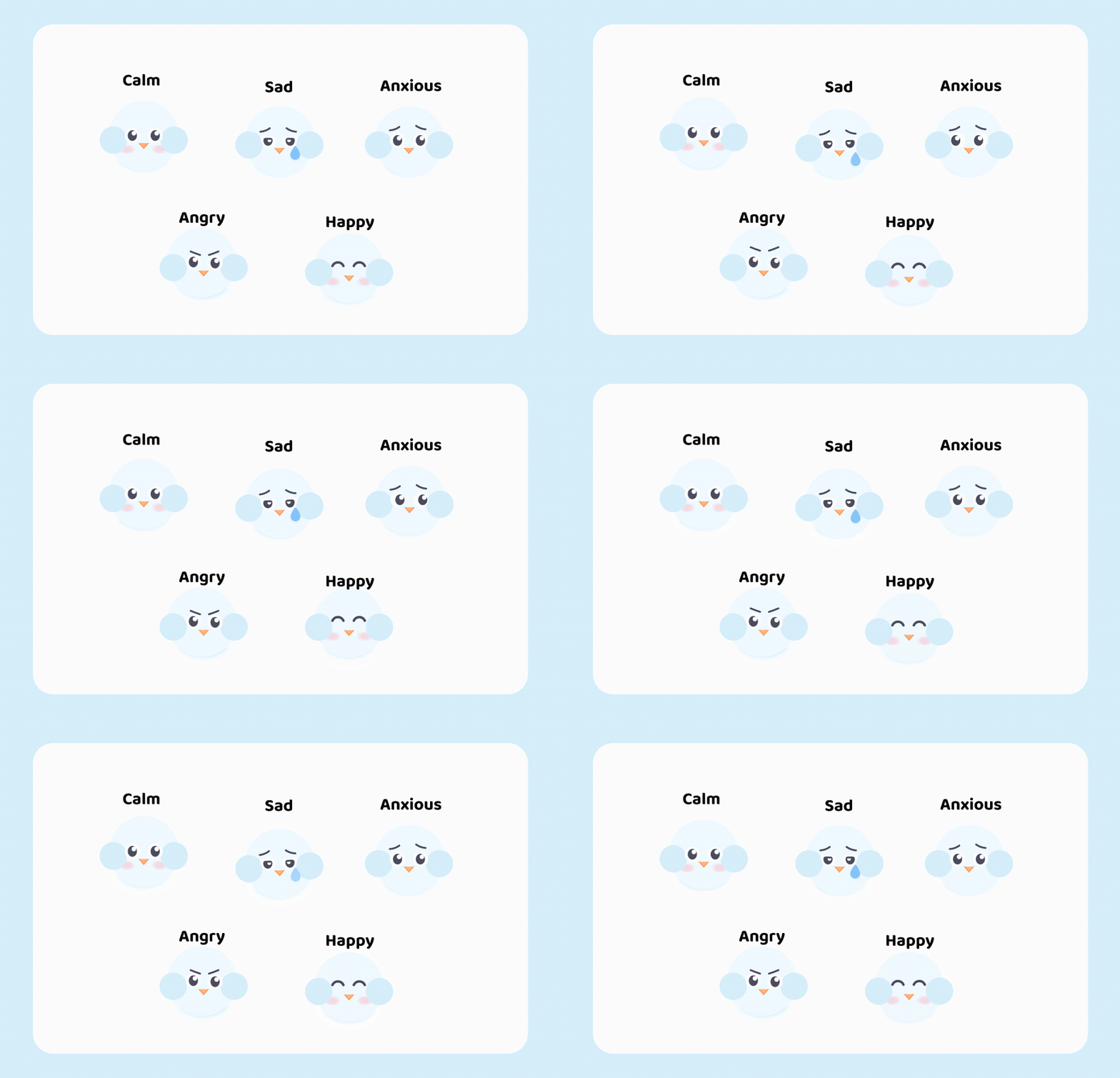
Make emotional cues clear and recognizable
A parent described using facial-expression cards to help their child recognize others’ feelings. During prototype review, they emphasized making Arlo’s expressions more distinct, informing refinements intended to communicate complex emotions more clearly.
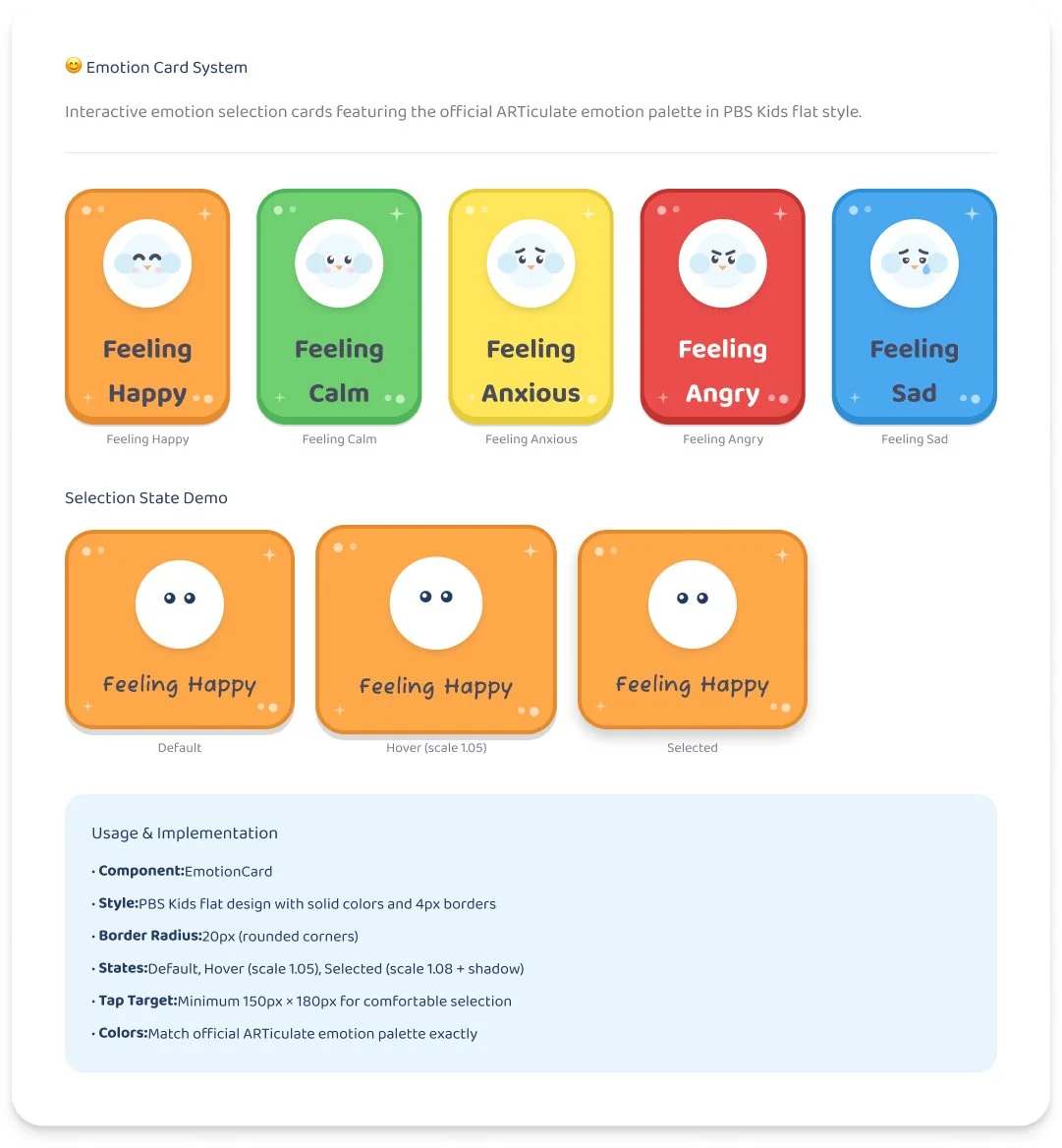
Keep emotion colors consistent
Therapist feedback during prototype review highlighted the importance of vibrant, consistent color associations. We refined the emotion palette and applied it throughout the app to give children a recurring visual reference when identifying feelings.
Designing and Refining ARTiculate
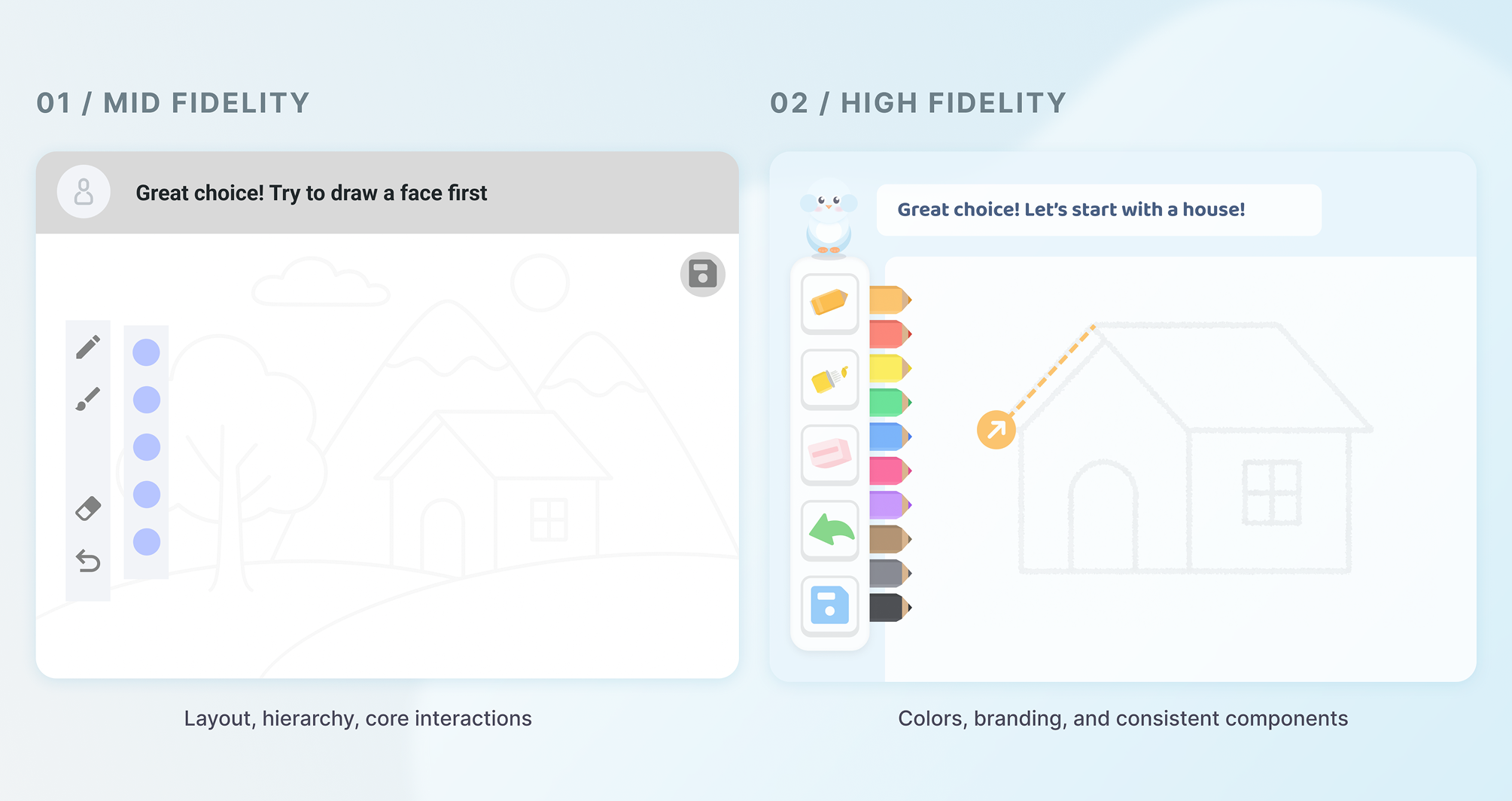
Working alongside another UX designer, I developed ARTiculate’s visual direction and helped translate our wireframes into a high-fidelity prototype. My work focused on the branding, Arlo’s character design, reusable interface components, and story-based rewards.
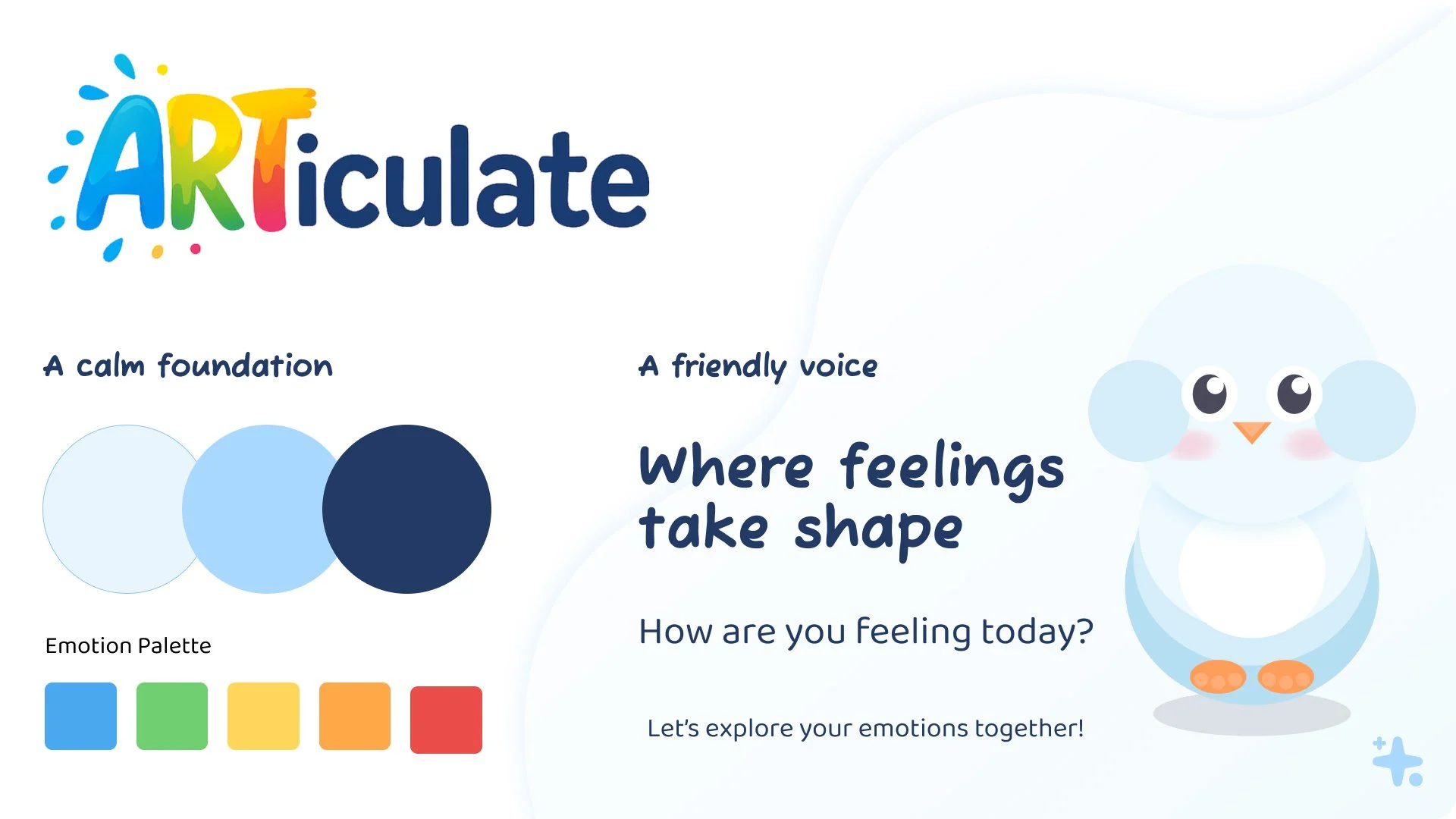
Creating a visual identity around emotional expression
I developed ARTiculate’s branding around an approachable drawing experience, using rounded forms, a soft blue environment, and vibrant emotion colors. The emotion palette carried across selection cards and dashboard views, creating a consistent visual language between the child’s activities and the information adults could review.
Arlo became a central part of that identity. I explored his appearance using AI-generated references, then customized the character in Illustrator to create high-fidelity assets with clearer color distinctions and recognizable expressions. His expressions gave the interface a way to communicate emotions beyond written labels.
Building reusable components with accessibility in mind
I used ChatGPT to develop prompts, explore mockups, and generate references, then used Figma Make to rapidly create initial component assets and explore micro-interactions. I customized buttons, cards, and color-picker tools to carry the design language across the prototype.
Accessibility considerations informed this work from the component level. Emotion cards combined color with facial expressions and text labels, providing multiple cues for identifying feelings. Large selection areas and clear interaction states were intended to make choices easier to recognize and use.
These components gave me a consistent foundation for refining screens and demonstrating interactions. Their accessibility and usability with children would still need direct evaluation.
Connecting engagement with Arlo’s emotional journey
I developed Arlo’s narrative storyboards around emotional experiences shared in interviews. The stories were intended to give children relatable situations through which to explore feelings, extending his role beyond delivering instructions.
The gamification strategy placed story rewards after creative activities. Completing an activity unlocked another part of Arlo’s story, connecting progression to discovering the character’s experiences. This was designed to encourage curiosity and continued participation; its effect on engagement remains untested.
Outcome and Next Steps

We delivered ARTiculate’s product concept, design system, character assets, prototype, and demo video. The project won the Audience Choice Award and reached the Top 5 of 72 competing teams.
The prototype demonstrated the proposed experience, while feedback from a therapist and parent helped us refine its visual communication. Its usability with autistic children and its therapeutic or learning benefits remain unvalidated.
My next step would be to test directly with children. I would use A/B testing to explore which branding direction resonates, followed by usability testing to understand whether touch targets are easy to use and whether the visuals feel engaging without becoming overstimulating. That research would help determine which design intentions hold up in practice and where the experience needs to change.